
Fair Housing in Practice: The real estate professional and the MLS
Championing fair housing is championing the American dream
Championing the American dream starts with the everyday actions of real estate professionals. At OneKey MLS, we support fair housing and recognize the critical role both real estate professionals and the MLS play in fostering a healthy, open marketplace where accurate, timely information is broadly available to the widest range of consumers and real estate practitioners alike.
Advancing fair housing means expanding access to homeownership. Fair housing isn’t just a principle, it’s a practice shaped daily through how information is shared, how listings are managed, and how clients are served. Homeownership goes beyond shelter; it’s a cornerstone of economic stability, a building block of wealth, and a defining element of the American dream. The promise of security today and opportunity for future generations.
Access to homeownership is access to opportunity, wealth, and stability. Fair housing is how we protect that promise.
We recognize that affordability remains a significant barrier, and we support programs to help bridge the gap. But meaningful progress requires more than commitment. It requires action. Real estate professionals influence access every day through marketing, listing entry and maintenance, and offering information to clients. These actions, done thoughtfully and consistently, can help address longstanding inequities.
The MLS plays a vital role as well. Through education, standards, and enforcement, OneKey MLS promotes accuracy, transparency, and compliance—ensuring that housing information is reliable and equitably available. By upholding the rules and policies agreed to by all Participants and Subscribers, the MLS helps safeguard both professionals and consumers while supporting a more inclusive marketplace.
This responsibility to uphold accessibility standards that reify equality and redress the mistakes of the past is under scrutiny now, as it has been many times before. It’s helpful to be reminded of the historical context, the need for Fair Housing champions, and the legacy of housing discrimination:
The Homestead Act of 1862, whose structural discrimination and practical application resulted in extreme disparities: increasing access to homeownership for some while excluding Native Americans, many Blacks, other people of color, and married women.
Redlining tactics — excluding minority groups from mortgage loans— perpetuated by the Federal Housing Authority kept Americans with good credit from qualifying for desirable loans based on geography and, by extension, race.
Despite the ostensible outlawing of discrimination in housing by the Civil Rights Act of 1968, discrimination persisted in the real estate and mortgage professions with steering practices that discouraged desegregation and inhibited access to loans for minority groups.
In more recent times, allegations of race/source-of-income discrimination, illegal exclusion of voucher holders, steering, minimum home price policies that disproportionately impact minority neighborhoods, and disability discrimination persist locally, according to the New York State Attorney General.
The impact of this legacy persists as predictable outcomes follow a lack of access, such as lower rates of homeownership in those impacted groups. Even those who did purchase homes were subject to higher-cost loans, higher fees, and thereby those purchases netted less equity and wealth accrual. These practices additionally forced minority groups into less desirable and sometimes hazardous housing conditions, again minimizing access to wealth and making maintaining home ownership more difficult, not to mention negative health outcomes. These results continue to be felt as the disparity in homeownership rates in 2023 between white and black parties was higher than it was in 1960 when discrimination was still legal (according to the National Housing Conference.)
What is Fair Housing and why is it essential
The National Fair Housing Act of 1968 prohibits discrimination in the sale, rental, financing, and advertising of housing based on race, religion, national origin, sex (as amended), handicap, and family status. It recognizes that property rights should not be abridged and upholds access to housing of choice. State and local laws also prohibit discrimination, often on a broader set of criteria, including sexual orientation, gender identity or expression, and source of lawful income. Learn more about New York State’s fair housing policy on the New York State Association of REALTORS' site.
NAR’s Fair Housing policy opposes discrimination based on race, color, religion, sex, handicap, familial status, sexual orientation, gender identity, and national origin. And though strides forward have been made, the fight is not over. NAR reported as of 2018 that only half the country prohibits discrimination based on sexual orientation, and that HUD noted that the highest proportion of complaints was discrimination based on disability.
OneKey® MLS subscribers must comply with applicable fair housing laws and regulations, including those at the state and local levels. Your everyday actions have a significant impact on protecting housing rights in America -- upholding access to housing of choice in treating everyone the same, and encouraging a fair and open housing marketplace.
The true impact of homeownership extends beyond a single investment and a single generation. According to NYC.gov, New York homeownership can mean 38-40x the net worth of renting—making fair housing not just a right but a pathway to generational wealth.
Everyday actions that advance Fair Housing
How can the New York real estate community advance fair housing? Everyday business practice has a wealth of opportunities to stand for what is right. The MLS has rules and policies in place to support accurate, timely, and compliant listing data that is aligned with Federal, State, and local laws. We take steps to educate, inform, and support adherence to these rules. Our adherence to the Real Estate Standards Organization (RESO)’s policies makes access and distribution to data easier and allowing for easier creation of new tools and technology.
Ensure you know and abide by the requirement to submit listings and NAR's Clear Cooperation. As a OneKey® MLS subscriber, you agree to abide by NAR’s Clear Cooperation policy. Listing agents must enter all listings within the OneKey® MLS footprint within one (1) business day of public marketing. If your seller instructs you to limit marketing, you must complete a Seller Internet Opt-out Form and have it signed by your seller. Your seller may choose to market to the MLS Only (preventing distribution outside the MLS) or as Private (preventing public marketing). The listing is entered with the appropriate selection in the Listing Exposure field. Learn more about Clear Cooperation and Listing Exposure.
Set and maintain accurate and up-to-date statuses for your listing. Review status definitions and update your listings promptly giving every potential buyer (and their agent) the same opportunity to access your listing. This ensures the broker-entered MLS data feed has the most up-to-date information.
Consider accessibility in your listings and showings, and fill out all the appropriate listing fields. NAR calls this accessibility issue “Visitable Housing.” Take into consideration how individuals with mobility or sensory challenges may be impacted. Among questions to consider are:
Is there wheelchair accessibility?
Are all age groups likely to be as comfortable accessing the listing?
What type of latches are available on doors?
Are there threshold height differences between types of flooring?
Consider countertop heights and how elements like sinks and faucets are positioned, as these can have an impact. Try to anticipate possible challenges clients may face living in the home and hosting others, and disclose this information to make for a better experience for all. You can find these fields to consider on your listing forms and in ADD/EDIT in Matrix.
Include Photo Type and Photo Description in your listings to improve their reach. Adding the caption or type to your listing photos and a description especially assists viewers who may use a visual accessibility screen reader.
Use inclusive language in your listing remarks and ensure that you describe the property, not neighborhoods or people. Consider how your language aligns with Fair Housing guidelines and that you accurately and inclusively represent the property. Remember that the law prohibits directly or indirectly stating a preference or limitation based on any protected class.
Utilize photos and videos in your listing that depict the property only. Just as listing descriptions in public remarks for your listing should focus on the property—not the people—so should your visual media. Though you may choose to show images that include people, remember that they may raise fair housing concerns if they inadvertently present the ideal resident for a particular house, property, or neighborhood. They also create the potential for use-of-likeness complaints against the listing agent. Photos that contain multiple individuals of only one race/class are of particular concern.
Call out discrimination when you see it. We all understand that mistakes happen when entering or updating a listing or sale, but we also have a responsibility to uphold the law and support fair housing. Please report questionable listings to Compliance@OneKeyMLS.com. Your report is confidential, and the Compliance team will follow up on each report.
Boost transparency about layout by including floor plans with your listings. Your OneKey MLS subscription includes floor plans through CubiCasa, an easy and accessible way to add information to your listing.
Be vigilant regarding Compliance concerns. Use CheckIT to review your published listings to better ensure compliance. If you receive a compliance notice, please address it promptly. View notices as opportunities for learning and redirection.
Everyday actions that battle the affordability gap
Understand the current realities of affordability:
New Yorkers pay higher rents relative to income than previous generations, and face rising cost of living expenses, making saving towards a down payment a challenge. The average first-time homebuyer is now 38. When consumers are forced to remain renters longer, they miss out on years of equity accumulation.
Mortgage rates further impact affordability and the inventory crunch. Higher interest rates make qualification more difficult and keep current homeowners in their homes longer, with the average time spent in a home increased to 10.9-15 years based on locality.
Homeownership rates in New York have dropped with each successive generation, widening the wealth gap. According to the NY Comptroller, New York has the lowest homeownership rate among the states (53.6% vs 65.8% nationally)
Low homeownership rates impact minority groups disproportionately. Statistics from the Comptroller also show that homeownership rates for white and Asian New Yorkers are higher than for Black and Hispanic households.
Access to homeownership impacts not just current clients, but generations. When possible many younger generations are using family support to purchase homes, but as that pool shrinks so does that possibility.
Highlight listing down payment assistance programs and affordability options to make home ownership as accessible as possible with Down Payment Resource (DPR), included with your OneKey MLS subscription. When listings are entered into the MLS, they are scanned in DPR's database for eligibility for down payment assistance. When matches are found, the DPR logo is displayed on single-line displays inside Matrix and visible on full listing reports in your client’s OneHome portal.
Buyer’s agents can research these options and share with clients.
Listing agents can make DPR eligibility a winning part of their listing marketing strategy.
Any OneKey subscriber can use the personalized landing page and Buyer Connect page made available through DPR, which allows consumers to employ a calculator to find their eligibility.
Share affordability calculators and information available through the consumer-facing site for independent use or use the options included in the MLS on behalf of your client (available in Matrix under the Finance heading, New Calculators).
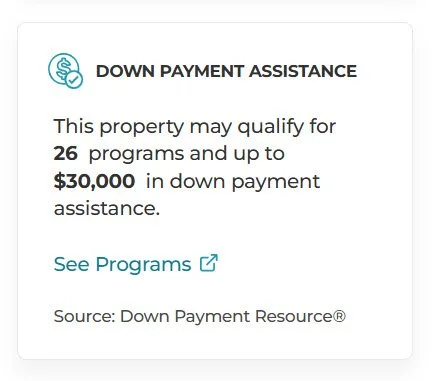
DPR sample as seen in eligible properties in OneHome
Fair housing is not a passive ideal. It is an active, ongoing commitment that lives in the choices we make every day. From the accuracy of our listings to the inclusivity of our language and the transparency we provide consumers and our clients, each action either advances equity or allows disparities to persist. Now is the time to be intentional. Review your practices, leverage the tools through the MLS, and hold yourself and your peers accountable to the highest standards. By doing so, you are not only complying with policy, you’re helping to expand access, rebuild consumer trust, and ensure that the promise of homeownership is truly within reach for all.